Designer and Process London host, Hannah Starley, talks about purpose-led work, dream clients and daily responsibilities
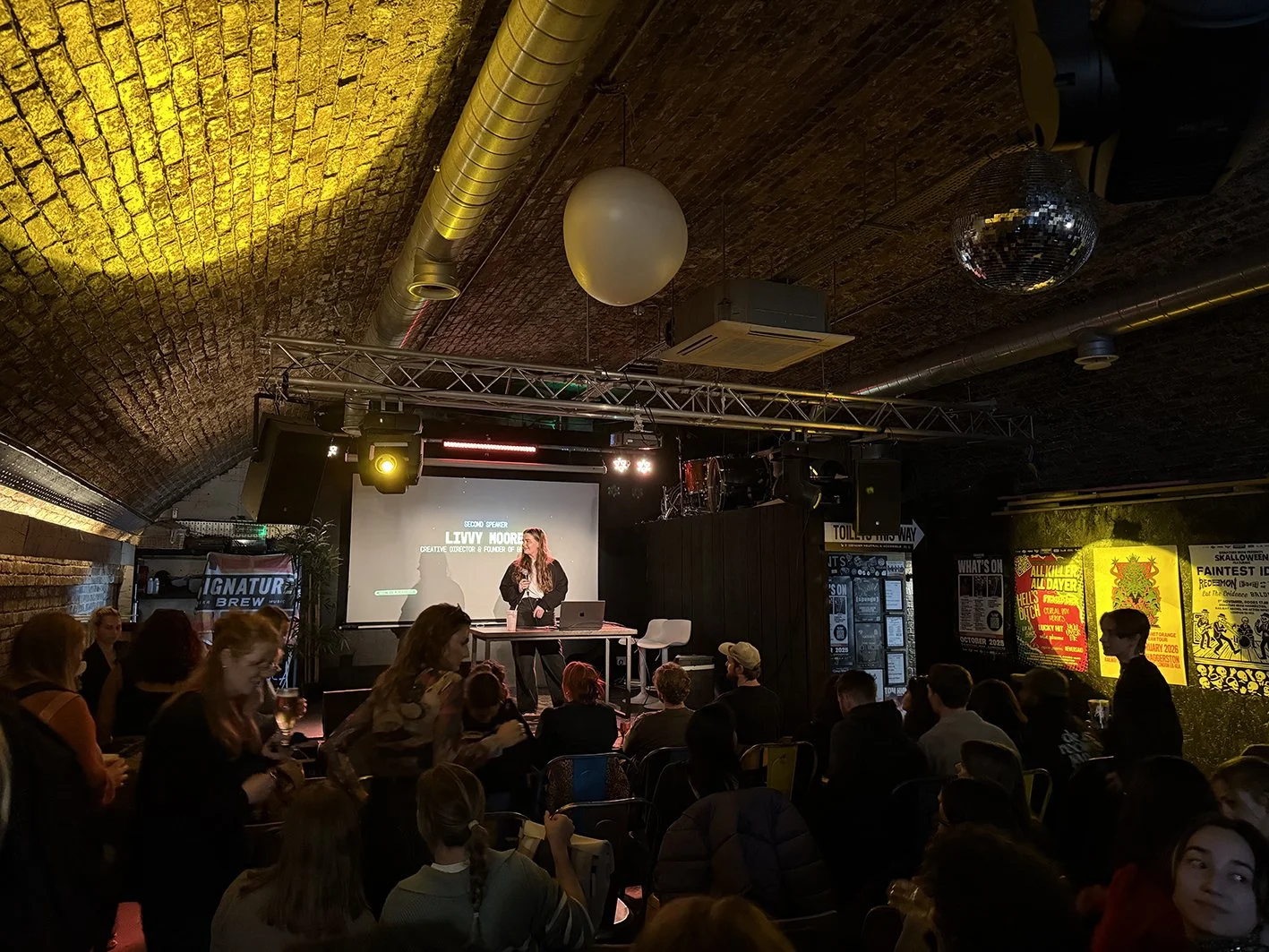
We are passionate about giving our community the space to share their story and to help lift-up diverse voices we will be speaking to those that make our work possible. In this interview we spoke to Hannah Starley about leaving education, going freelance and why she hosts Process London.
Hey Josh! Tell us about your career journey so far?
I graduated from the University of Portsmouth in 2023, which, given I was born in Southampton, was a slightly questionable decision.
I’m now almost three years into my career. I started out with a couple of internships, moved into junior roles, and then progressed towards a middle weight position.
Alongside this, I freelanced throughout, which helped me develop skills beyond design, from confidently talking about and presenting my work to clients, to managing projects and handling invoices.
I’m now a full-time freelancer. I reached a point where I wanted to do more purpose-led work, projects where I could have a genuine impact, help people, and work more closely and collaboratively with them.
Freelancing felt like the best way for me to pursue that while continuing to grow creatively and professionally.
What advice would you give to emerging talent looking to enter creative industries?
Don't wait for permission.
Put your work out there even when it's not perfect. Always be yourself, and get comfortable with rejection early; every rejection is just a redirection.
Learn how to explain your design decisions, that's what makes a portfolio interesting, not just polished visuals, but the strategy and process behind it.
The creatives I look up to most are still learning, still open to new ideas, still collaborating well, and they keep creating even when no one's watching.
On a day-to-day basis what are your main responsibilities?
Freelancing means I'm now doing things including business, finance, and admin alongside the actual design work: invoicing, client calls, proposals, and more.
It's a lot more than just "designing things."
Most people treat that as the boring part. I love it. I get to learn about every cog in the system, and that's given me a real understanding of the wider picture.
“Don't wait for permission. Put your work out there even when it's not perfect. Always be yourself, and get comfortable with rejection early; every rejection is just a redirection. .”
Is there one brand you would love to work with in future?
I've worked with some amazing brands already, but there are two dream clients: Liverpool Football Club and Young Epilepsy, for very different reasons.
I'm a huge Liverpool fan, so designing for the club would be a genuine 'made it' moment, one that would feel like a family achievement, not just a personal one.
Young Epilepsy personally helped me as a child. I was diagnosed with Juvenile Absence Epilepsy and Tonic-clonic seizures at 13. It taught me how to keep showing up when things feel out of your control, and that's stayed with me in how I run my business today.
Designing for an organisation that supports young people living with epilepsy would mean everything.
How did you first hear about Process Events?
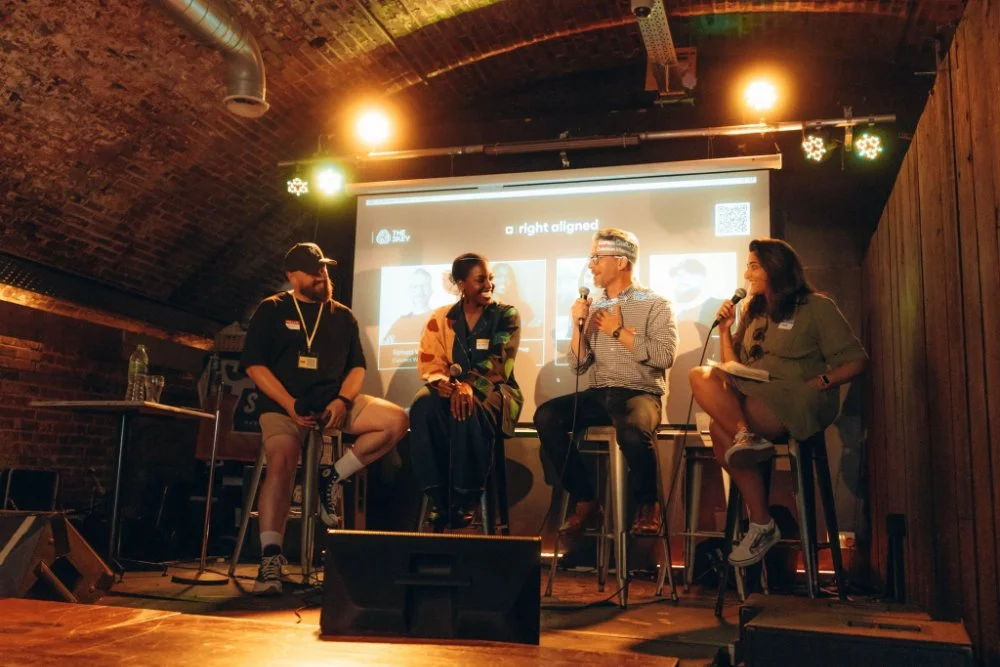
I heard about Process while attending one of the Right Aligned webinars at the end of 2023. I got so much from those talks that I was convinced Process would give me even more so I traveled from Portsmouth to Manchester to be at the very first one.
That's how sold I was.
The first speaker at that event was Antonia Arbova, a young student, and it spoke to me in so many ways. It made me realise every voice matters, regardless of time served.
What motivated you to start hosting in your city?
After attending a couple of the early Manchester events, I started talking to Chris about taking Process south, I didn't want it to feel like it was only available in the north, and I wanted people down here to have the same access to it.
I was originally planning for Portsmouth, and somewhere in the middle of venue-hunting I ended up moving to London, which is where my hosting journey actually began.
London already has so many brilliant creative and design events, but the community and message behind Process resonated with me on a different level, and I could only hope I'd be able to bring others along on that same journey.
“The first speaker at that event was a student, and it spoke to me in so many ways. It made me realise every single voice in this industry matters, regardless of time served.”
How does it make you feel when you are in a packed room full of like-minded people?
Magical. There's nothing I love more than looking around a room and watching people make friends, learn from one another, and swap advice like they've known each other for years.
That connection, that's the whole point. We love and appreciate everyone who shows up and supports our mission. Without them, we wouldn't be building such an incredible community.
Have you started to see the impact your hard work is having on the community?
Absolutely. We've had incredible feedback: people telling us they've made connections and friends, found their next job, or finally felt brave enough to put themselves out there after coming to an event. And honestly, we feel like we're only just getting started.
Are there any common challenges attendees are experiencing?
The one I hear most is how to stand out in an increasingly competitive industry. A lot of creatives are also figuring out how to build confidence, grow their network, find clients, or navigate a career change.
What I've noticed at our events is that just having an honest conversation with someone who's been through the same thing can shift how someone feels about their own path, that's really what these events are for, to make people feel seen.
Where do you think the design industry will be in ten years?
I think the next ten years are going to be genuinely exciting for design. I think it'll be far more blended with technology, AI tools will handle more of the repetitive production work, which should free designers up to focus on strategy, storytelling, and the human side of the craft.
I also expect in-person community and events to matter even more, as a counterbalance to increasingly digital workflows.
I've already met so many talented students and young people entering the industry now, and as they begin to move towards more senior roles, we'll see a real wave of talent shaping the future.
Follow Hannah Starley